
March Gardening Checklist by USDA Zone
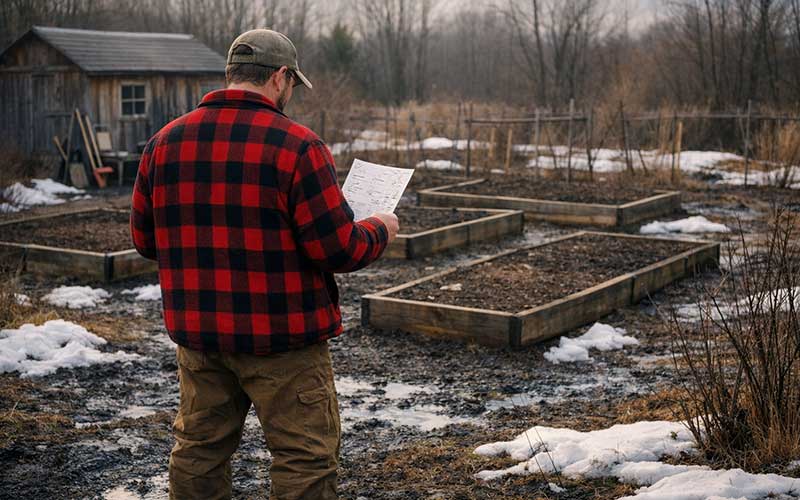
No matter where you garden, March is a month of preparation.
March is when the garden begins to wake up, but what you should be doing depends entirely on your climate. In some areas, the soil is still frozen. In others, warm-season crops may already be going in.
This March gardening checklist is organized by USDA Plant Hardiness Zones 3–10 to help you focus on the right tasks at the right time. Use it as a working guide for seasonal garden prep, pruning, seed starting, and early planting.
If you don’t know your zone, consult the USDA Plant Hardiness Zone map before you begin. Keep in mind that average last frost dates and soil temperature matter more than calendar dates, so adjust timing based on your local conditions.
Essential March Garden Prep Tasks (All Zones)
No matter where you garden, March is a month of preparation.
- Clear winter debris from beds, leaving healthy leaf mulch in place where beneficial insects may still be overwintering.
- Check for frost heaving around perennials and gently press exposed roots back into the soil once it has thawed.
- Avoid digging or tilling wet soil; wait until it crumbles easily in your hand.
- Add finished compost to vegetable beds and around established perennials if soil is workable.
- Sharpen and sanitize pruners and garden tools before heavy spring use.
- Inspect irrigation lines, hoses, and drip systems for winter damage.
- Turn and refresh compost piles as temperatures rise.
- Check stored bulbs and tubers for rot or shriveling.
- Begin mapping crop rotation and succession planting plans.
- Review seed inventory and organize indoor seed-starting schedules.
Careful preparation in March prevents compaction, disease spread, and rushed decisions later in the season.
Zone 3 – March Garden Tasks
In Zone 3, winter conditions often persist through much of March, so most work happens indoors.
- Prune overgrown non-spring-flowering shrubs while still dormant.
- Start seeds indoors under lights, including onions, leeks, celery, tomatoes, edging lobelia (Lobelia erinus), asters, marigolds, cauliflower, cabbage, and Brussels sprouts.
- Transplant seedlings into larger containers after they develop their second set of true leaves.
- Pot up stored bulbs such as tuberous begonias, dahlias, canna (Canna × generalis), and calla lilies (Zantedeschia aethiopica) to encourage early growth.
- Water evergreens near foundations if soil is thawed and dry, especially during periods without snow cover.
Outdoor planting will typically wait until April or May.
Zone 4 – March Garden Tasks
Zone 4 begins to transition, though hard freezes remain common.
- Prune apple and mountain ash trees while dormant, removing any visible fire blight cankers by cutting well below infected tissue and disinfecting pruners between cuts.
- Remove black knot from cherry and plum trees before active growth resumes.
- Start peppers and eggplants indoors under grow lights.
- Start zinnias, salvia, petunias, and nicotiana indoors later in the month.
- Pot up earlier seedlings and rootbound houseplants.
- Leave protective mulch in place around perennials to guard against freeze-thaw cycles.
March is primarily a pruning and seed-starting month in this zone.
Related: How to Start Seeds Indoors and Grow Healthy Seedlings Every Time
Zone 5 – March Garden Tasks
In Zone 5, soil may become workable by mid- to late March depending on weather.
- Start tomatoes, peppers, and eggplants indoors under lights.
- Direct sow peas, spinach, lettuce, and radishes outdoors once soil can be worked without clumping.
- Plant seed potatoes late in the month if soil temperatures are above 40°F.
- Cut back ornamental grasses before new growth begins.
- Prune dead or damaged wood from trees, shrubs, and roses while still dormant.
- Transplant hardy pansies outdoors.
- Start perennial flowers indoors.
Avoid working soil that remains saturated from snowmelt.
Related: Preparing Garden Soil in Spring: When and How to Get Beds Ready for Planting
Zone 6 – March Garden Tasks
March in Zone 6 is a true transition month between winter and spring.
- Divide hostas and other hardy perennials as new growth emerges.
- Pull mulch slightly back from emerging bulbs but keep it nearby in case of cold snaps.
- Plant dormant roses, shrubs, and trees once soil is workable.
- Move hardened-off cool-season crops into cold frames or protected areas.
- Direct sow peas, spinach, poppies, larkspur, and other hardy annuals.
- Top-dress lawns lightly with compost once snow has melted and drainage has improved.
Late frosts remain possible, so protect tender growth as needed.
Zone 7 – March Garden Tasks
Soil warms steadily in Zone 7 during March.
- Direct sow carrots, beets, kohlrabi, radishes, lettuce, turnips, and Swiss chard.
- Transplant onions, broccoli, cabbage, cauliflower, collards, and asparagus crowns.
- Plant seed potatoes early in the month.
- Set out hardy herbs such as rosemary, chives, and thyme if nighttime temperatures are consistently above freezing.
- Continue succession sowing of cool-season crops.
Delay planting tender crops like basil and tomatoes until danger of frost has passed.
Zone 8 – March Garden Tasks
March is an active planting month in Zone 8.
- Finish planting spinach, turnips, mustard, beets, carrots, and broccoli early in the month before heat arrives.
- Plant corn, tomatoes, squash, peppers, and cucumbers after soil temperatures warm and frost risk diminishes, often mid- to late March.
- Pull mulch back from perennials to encourage soil warming.
- Plant cool-tolerant annual flowers such as snapdragons and petunias.
- Fertilize lawns once grass resumes active growth.
Be prepared with row covers for occasional late cold snaps.
Related: How to Grow Broccoli: A Complete Guide to Planting, Care, and Harvest
Zone 9 – March Garden Tasks
Spring growth accelerates quickly in Zone 9.
- Feed roses with compost and organic amendments such as cottonseed meal or alfalfa meal.
- Plant cool-season vegetables including cabbage, broccoli, spinach, radishes, lettuce, and parsley early in the month.
- Harden off tomatoes, peppers, and eggplants before transplanting outdoors after the last expected frost.
- Prune frost-damaged citrus once new growth reveals viable wood.
Monitor for aphids and other early pests.
Zone 10 – March Garden Tasks
Warm-season planting dominates in Zone 10.
- Plant okra, sweet potatoes, cucumbers, melons, mustard, and collards.
- Plant heat-tolerant flowers including petunias, zinnias, cockscomb (Celosia cristata), and caladium (Caladium × hortulanum).
- Start papaya (Carica papaya), chayote (Sechium edule), roselle (Hibiscus sabdariffa), and jelly melon (Cucumis metuliferus).
- Prune tabebuias after flowering.
- Apply compost around new plantings and along the dripline of established trees and shrubs.
In hot climates, irrigation management becomes increasingly important.
What to Plant in March (Quick Reference)
Exact timing depends on your USDA zone and average last frost date.
Cool-Season Vegetables
Peas, spinach, lettuce, radishes, carrots, cabbage, broccoli, cauliflower.
Warm-Season Crops (Zones 7–10 late month)
Tomatoes, peppers, squash, corn, cucumbers.
Flowers to Start Indoors
Zinnias, marigolds, petunias, salvia.
Herbs
Parsley, cilantro, thyme, chives.
Watch for These March Garden Issues
- Late hard freezes damaging new growth.
- Spread of fire blight during improper pruning.
- Black knot infections on stone fruit trees.
- Working soil while too wet, leading to compaction.
- Early aphids and slugs emerging in mild weather.
- Removing mulch too early and exposing roots to freeze damage.
Frequently Asked Questions
Can I plant tomatoes in March?
Tomatoes can be planted outdoors in March only in warmer zones such as 8–10, and typically after the last expected frost. In colder zones, start seeds indoors and transplant after frost danger passes.
Should I fertilize in March?
Light compost applications are beneficial in early spring. Avoid heavy nitrogen fertilization until plants show active growth.
Is it too early to remove mulch?
Often yes. Keep mulch in place until soil begins warming consistently and severe freezes are unlikely.
How do I know if soil is ready to work?
Squeeze a handful of soil. If it forms a sticky ball or feels muddy, it is too wet. Soil should crumble easily before digging or planting.
Spring unfolds differently in every zone. Work with your soil temperature and frost dates rather than relying solely on the calendar.