
EWG Dirty Dozen 2026: The Most Pesticide-Contaminated Fruits and Vegetables
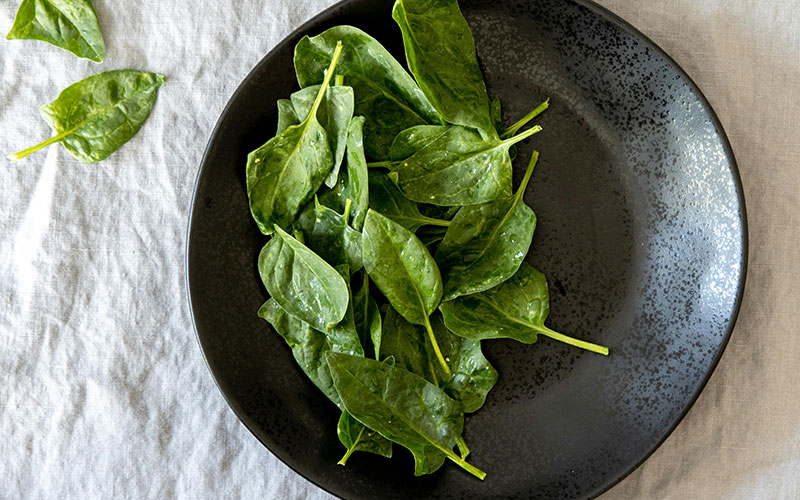
Spinach and leafy greens now top the list — here’s what to buy organic and what you can safely skip.
The Environmental Working Group’s Dirty Dozen list has been updated for 2026, and this year’s rankings reflect a continued shift toward leafy greens and delicate fruits carrying the highest pesticide loads.
The Dirty Dozen highlights the conventionally grown fruits and vegetables with the highest levels of pesticide residues based on testing from the U.S. Department of Agriculture and the Food and Drug Administration. While these findings are important, it’s equally important to remember that fruits and vegetables remain a critical part of a healthy diet.
What Is the EWG Dirty Dozen?
The Dirty Dozen is an annual ranking of produce with the highest pesticide contamination levels. The Environmental Working Group compiles this list using government testing data on conventionally grown produce after it has been washed and, when applicable, peeled.
This means the pesticide residues measured reflect what consumers are likely to be exposed to when the food is prepared in a typical home kitchen.
How the Dirty Dozen Is Ranked
EWG ranks produce based on several key factors related to pesticide contamination:
- The total number of different pesticides detected on a sample
- The average number of pesticides found per sample
- The overall concentration of pesticide residues
- The frequency with which pesticides appear across all samples tested
Testing consistently shows that a large percentage of Dirty Dozen samples contain multiple pesticide residues, sometimes several different chemicals on a single piece of produce.
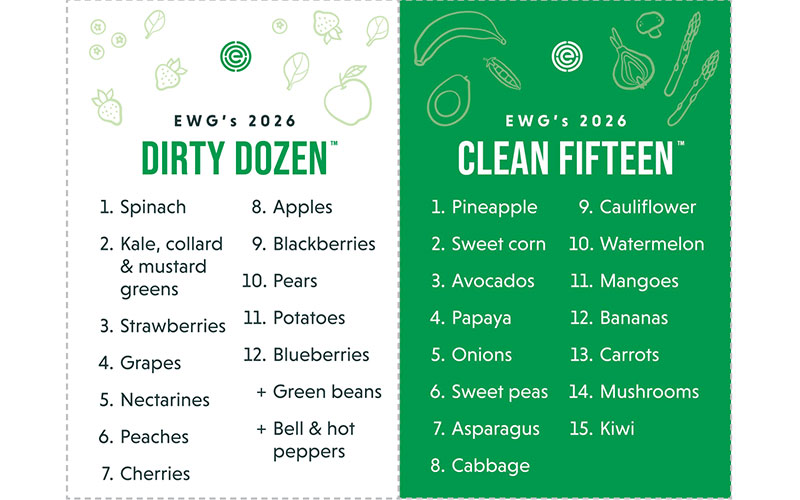
Dirty Dozen 2026
These are the most pesticide-contaminated conventionally grown fruits and vegetables based on 2026 data:
- Spinach
- Kale, Collard & Mustard Greens
- Strawberries
- Grapes
- Nectarines
- Peaches
- Cherries
- Apples
- Blackberries
- Pears
- Potatoes
- Blueberries
Clean Fifteen 2026
These fruits and vegetables tend to have the lowest levels of pesticide residues and are generally considered safer to buy conventionally grown:
- Pineapple
- Sweet Corn
- Avocados
- Papaya
- Onions
- Sweet Peas
- Asparagus
- Cabbage
- Cauliflower
- Watermelon
- Mangoes
- Bananas
- Carrots
- Mushrooms
- Kiwi
Related: 9 Spring Vegetables Packed With Nutrients
What Changed in 2026?
The 2026 update brings a few notable shifts in the rankings.
Leafy greens have taken the top spots, with spinach ranked number one and a combined category of kale, collard, and mustard greens close behind. These crops are especially vulnerable to insect pressure, which often leads to heavier pesticide use.
Several new items have entered the list, including blackberries, pears, potatoes, and blueberries. These additions reflect changing growing practices, increased testing, and expanded data analysis.
Apples, once consistently near the top, have moved further down the list, signaling some improvement in residue levels compared to past years.
What This Means for Your Grocery List
The Dirty Dozen is not a warning to avoid fruits and vegetables. Instead, it’s a tool to help you make more informed decisions about how you shop.
If your budget allows, prioritize organic options for the highest-residue items and feel confident choosing conventional versions of lower-risk produce. Small, targeted changes can significantly reduce overall pesticide exposure without increasing your grocery bill dramatically.
When to Buy Organic and Why It Matters Most
If you’re trying to prioritize where organic matters most, focus on how the produce is grown and how it’s typically consumed.
Leafy greens like spinach, kale, collards, and mustard greens are a top priority because their large surface area and delicate leaves make them more susceptible to absorbing and retaining pesticide sprays. These are rarely peeled and are often eaten raw, increasing potential exposure.
Berries such as strawberries, blackberries, and blueberries should also be high on your organic list. Their soft skin cannot be peeled, and they tend to absorb pesticides easily during growing and handling.
Thin-skinned fruits like grapes, nectarines, peaches, cherries, apples, and pears are commonly treated with multiple pesticides throughout the growing season. Because the skin is eaten, residues remain on the portion you consume.
Potatoes are a unique case. While they are peeled by some, they are often treated with pesticides in the soil and may absorb residues below the surface, making organic a better option when possible.
On the other hand, produce with thick, protective outer layers is generally lower risk. Items like avocados, pineapples, and bananas have skins that act as a barrier, which is why they consistently appear on the Clean Fifteen list.
If you can only choose a few organic items, start with leafy greens and berries. These categories tend to deliver the biggest reduction in pesticide exposure.
Related: Organic vs Natural Food Labels: What’s the Real Difference?
Does Washing Remove Pesticides?
Washing produce can reduce some pesticide residues, especially those on the surface. However, it does not remove all contaminants.
Some pesticides are systemic, meaning they are absorbed into the plant as it grows. These cannot be washed away because they are present within the tissue of the fruit or vegetable.
Peeling can reduce exposure further, but it also removes valuable nutrients found in the skin. This makes choosing organic for high-residue produce a more effective long-term strategy.
Simple Ways to Reduce Pesticide Exposure
- Prioritize organic options for Dirty Dozen produce
- Wash all fruits and vegetables thoroughly under running water
- Eat a varied diet to avoid repeated exposure to the same pesticides
- Choose seasonal produce when possible, which often requires fewer chemical inputs
- Use the Clean Fifteen list to confidently buy conventional when it makes sense