
Getting Started With a Rain Barrel: A Simple Guide to Harvesting Rainwater
How to harvest water from the sky and cut down on your utility bills.
Collecting rainwater is one of the simplest ways gardeners can conserve water and reduce reliance on municipal supplies. A rain barrel captures runoff from your roof and stores it for later use in the garden. During dry stretches, that stored water can help keep plants healthy without turning on the hose.
A frequently used rain barrel can save about 1,300 gallons of water during the summer months, according to estimates often cited by the EPA. For gardeners, that can mean fewer trips to the faucet and a more resilient garden during hot weather.
What Is a Rain Barrel?
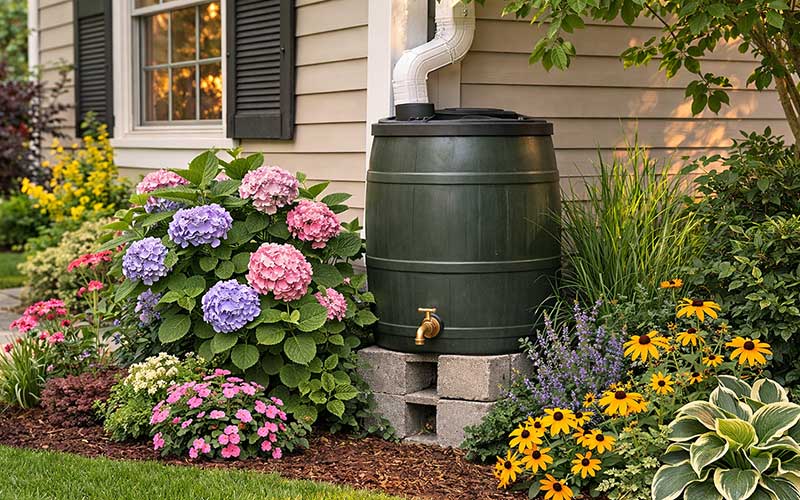
Rain barrels are simple containers designed to collect and store rainwater from rooftops. Typically placed beneath a gutter downspout, the barrel captures rain as it flows off the roof and through the gutter system.
Most rain barrels include a screened opening that allows water to enter while keeping out leaves and debris. A spigot near the bottom of the barrel allows you to attach a hose or fill watering cans. Although the water collected in a rain barrel is not considered safe for drinking, it works well for watering plants and other outdoor tasks.
Why Use a Rain Barrel in the Garden?
Rain barrels offer several practical benefits for home gardeners. By capturing rainwater, you reduce the amount of treated municipal water used in the landscape. This can help lower water bills during the growing season, especially when gardens require frequent watering.
Rainwater is also naturally free of chlorine and other treatment chemicals commonly found in tap water. Many gardeners find that plants respond well to this untreated water.
Another advantage is reduced stormwater runoff. When rainwater is captured and reused in the garden, less water flows from roofs into driveways, storm drains, and local waterways.
How a Rain Barrel System Works
A rain barrel works by collecting the water that runs off your roof during rainfall. When it rains, water flows across the roof and into the gutters that line the edge of the house. From there, the water moves down through the downspouts.
Instead of letting that water flow directly onto the ground, a rain barrel is positioned beneath the downspout to capture it. Many systems use a shortened downspout or a diverter that directs water into the barrel.
Before the water enters the barrel, it typically passes through a fine mesh screen. This screen helps keep out leaves, twigs, and insects. Once the barrel fills, the water can be accessed through a spigot near the bottom. Gardeners often attach a hose or fill watering cans directly from this outlet.
Many rain barrels also include an overflow outlet that allows excess water to drain safely away once the barrel is full.
Setting Up a Rain Barrel
Installing a rain barrel is usually a simple project that can be completed in an afternoon. Start by choosing a downspout that is close to the garden areas where you plan to use the water.
Place the barrel on a flat, stable surface so it will remain steady when full. Many gardeners elevate the barrel slightly using concrete blocks or a sturdy platform. Elevating the barrel improves water flow from the spigot and makes it easier to fill watering cans.
Next, shorten the existing downspout or install a rain diverter so that water flows into the screened opening at the top of the barrel. If your barrel includes an overflow outlet, attach a hose that directs excess water away from your home’s foundation.
Once the system is set up, the barrel will automatically begin collecting water whenever it rains.
Rain Barrel Maintenance Tips
Rain barrels require very little maintenance, but a few simple habits will help keep the system working properly.
- Elevate the barrel on concrete blocks or a sturdy platform so gravity can help move water from the spigot to your garden.
- Clean your gutters regularly to reduce the amount of leaves and debris that reach the barrel.
- Cover the barrel’s water intake with a fine mesh screen. This traps debris and helps prevent mosquitoes and other insects from entering the water.
- Check the screen periodically, especially after heavy storms, to make sure it has not become clogged.
- Avoid letting rainwater sit in the barrel for longer than a month without use. If algae begins to develop, a tablespoon of vinegar can help discourage growth.
- Occasionally rinse sediment from the bottom of the barrel to keep the water outlet from clogging.
- Make sure overflow hoses direct excess water away from your home’s foundation so water does not pool near the structure.
- In cold climates, drain the barrel in fall and disconnect it from the downspout. Store the barrel upside down so it remains dry and clean through the winter.
- Repair small leaks with aquarium caulk, a clear sealant commonly available at hardware stores.
Using Rainwater Safely in the Garden
Water collected in a rain barrel is best used for outdoor purposes. Gardeners commonly use it for watering vegetable beds, irrigating flower gardens, and keeping container plants hydrated during hot weather.
Rainwater can also be useful for rinsing garden tools, washing muddy boots, or cleaning outdoor surfaces.
Because the water flows across rooftops and gutters before entering the barrel, it may contain contaminants such as dust, bird droppings, or roofing materials. For this reason, rain barrel water should not be used for drinking, cooking, or other household uses unless it has been properly filtered and treated.
Used properly, however, a rain barrel can provide a steady supply of water for many everyday garden tasks.