6 Simple Eco-Friendly Projects for Kids
Hands-on projects that help children explore nature, reduce waste, and build everyday sustainable habits.
Want to help your kids become more aware of nature, waste, and the resources they use every day? Start with hands-on projects.
Children can learn about sustainability by observing what is happening around them, finding new uses for old things, and looking for simple ways to reduce waste at home. These six eco-friendly projects are designed for different ages, but most can be adapted for younger or older children.
The goal isn’t to make your family perfectly green. It’s to give kids practical ways to notice the natural world and understand how everyday choices can make a difference.
Eco-Friendly Projects for Toddlers and Preschoolers
Younger children don’t need complicated lessons about sustainability. Simple activities that let them explore, observe, and get their hands dirty can introduce them to the natural world.
1. Build a Mini Bug Hotel
A bug hotel gives small creatures places to shelter while giving kids an excuse to look closely at the wildlife around them. In natural habitats, insects and other invertebrates use spaces in bark, dead wood, leaves, hollow stems, and other materials for shelter. Bug hotels recreate some of those nooks and crannies in a small space.
What the child is learning:
- Small animals need suitable habitats.
- Different creatures use different kinds of shelter.
- Natural materials can provide useful habitat.
- Outdoor observation can be a hands-on way to learn about biodiversity.
What you need:
- A sturdy terracotta plant pot or similar container
- Small sticks and twigs
- Pine cones
- Bark
- Dry leaves
- Other clean, natural materials that create small gaps
How to do it:
- Choose a sheltered spot outdoors.
- Fill the container with natural materials, leaving plenty of small spaces and gaps.
- Make sure the container is stable and won’t easily tip over.
- Leave the habitat alone for a while so wildlife has time to use it.
- Check back with your child occasionally and see whether you notice insects or other small creatures.
You don’t need to make a large structure. A small container can provide useful shelter, and simple bug hotels can be made with materials such as a terracotta pot and hollow plant stems or bamboo canes. An adult should handle cutting bamboo or other materials that require sharp tools.
Try this: Ask your child, “What do you think might be hiding in there?” Come back a few days later and see whether your prediction was correct.
Related: How to Attract Fireflies to Your Yard Naturally
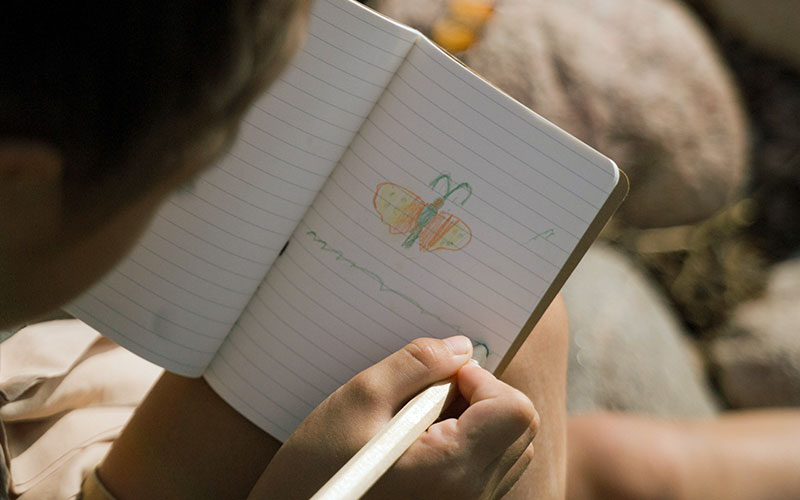
2. Start a Nature Journal
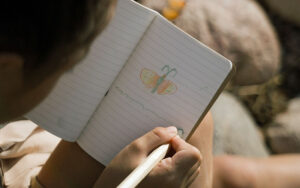
A nature journal turns a walk around the yard, neighborhood, or local park into an ongoing observation project. Children can draw what they see, write down simple observations, and compare the same place as it changes.
Garden and nature journals can be used to document changes over time, including what was planted, how things grew, and how an outdoor space changed.
What the child is learning:
- How to observe details in nature.
- How plants and outdoor spaces change over time.
- How to record observations.
- How seasons affect the natural world.
What you need:
- A blank notebook
- Pencil or crayons
- Colored pencils, if desired
How to do it:
- Choose a tree, garden bed, houseplant, or favorite outdoor spot.
- Have your child draw what they see.
- Add a few simple notes about the weather, plants, insects, birds, or other things they notice.
- Return to the same place regularly.
- Compare the new entry with an older one.
For younger children, drawing may be enough. Older children can add dates, measurements, questions, and predictions.
Try these prompts:
- What looks different today?
- What colors do you see?
- Did you notice any insects or birds?
- What plants are flowering?
- What changed since your last visit?
- What do you think will change next?
Green Projects for School-Age Kids
As children get older, they can start looking beyond nature and examining how their family’s habits affect the amount of waste they create.
3. Give an Old Item a New Job
Before something goes into the recycling bin or trash, challenge your child to think of another way to use it.
Reusing and repurposing unwanted household items can help children think about waste, consumerism, and how products can have useful lives beyond their original purpose. KidsGardening recommends reuse and repurposing activities for children ranging from preschool through high school.
What the child is learning:
- Reuse can be an alternative to throwing something away.
- Everyday objects can have multiple uses.
- Creative thinking can help reduce waste.
- Not everything that is unwanted needs to become trash immediately.
What you need:
- One or more clean household items that would otherwise be discarded
- Basic craft supplies appropriate for your project
How to do it:
- Find a clean item that is no longer needed.
- Ask your child to brainstorm several possible new uses.
- Choose one idea that is safe and practical.
- Turn the item into something useful.
- Talk about how giving it a new purpose changed its useful life.
Try using materials such as clean containers, cardboard, jars, or other household items for garden organizers, plant containers when appropriate, labels, or craft projects. KidsGardening provides numerous examples of turning unwanted household materials into useful garden projects.
Try this: Don’t tell your child what to make. Give them one object and see how many different uses they can invent.
4. Try a One-Day Waste-Reduction Challenge
Instead of asking your family to achieve “zero waste,” turn waste reduction into an observation and problem-solving experiment.
KidsGardening’s waste-audit activity recommends collecting and sorting household waste, measuring or observing the amount produced, recording the results, and discussing ways to reduce, reuse, and recycle.
What the child is learning:
- The difference between reducing, reusing, and recycling.
- How much waste a household creates.
- Which everyday items are being thrown away.
- How small changes can reduce unnecessary waste.
What you need:
- Notebook or paper
- Pencil
- Optional boxes or containers for sorting
- Optional scale for measuring waste
How to do it:
- Choose one ordinary day rather than a special occasion.
- Have your child keep track of items that would normally become household waste.
- Look for things that could have been avoided, reused, or replaced with reusable alternatives.
- Record the results.
- Choose one realistic change to try the following week.
For an older child, you can make the project more scientific by sorting waste into categories and comparing the amounts. KidsGardening suggests using containers and, where appropriate, scales or other measurements to examine household waste.
Try this: Challenge the family to reduce one specific type of disposable waste for a week, such as disposable drink containers or paper towels.
Sustainable Projects for Teenagers
Teenagers can take sustainability projects a step further by looking at consumption, household habits, and the resources used every day.
5. Give Clothes a Second Life
Clothing is an easy place for teenagers to explore the idea of using what they already have before buying something new.
Upcycling means giving an unwanted object or material a new use, and it can be a practical way to keep useful materials from being discarded.
What the child is learning:
- How to extend the useful life of clothing.
- Why repair and reuse can be alternatives to replacing something.
- How secondhand purchases can fit into a reuse strategy.
- How to think more carefully about purchases.
What you need:
This depends on the project. You might need:
- An older shirt, pair of jeans, or other garment
- Basic sewing supplies for simple repairs
- Fabric scissors for appropriate projects
- Optional craft supplies
How to do it:
Choose one of these projects:
- Repair a garment with minor damage.
- Customize an older piece of clothing.
- Turn an unwanted garment into something useful.
- Organize a clothing swap with friends or family.
- Look for a secondhand item before buying something new.
The point isn’t that teenagers should never buy new clothes. Instead, have them consider whether something can be repaired, reused, swapped, donated, or purchased secondhand before automatically replacing it.
Try this: Before buying something new, ask three questions: Do I need it? Can I repair or reuse something I already own? Could I find it secondhand?
6. Give Your Home a Green Audit
A home audit can turn sustainability into a detective project. Instead of simply telling teenagers to conserve energy and water, have them look around the house for specific opportunities to reduce unnecessary use.
ENERGY STAR provides kid-focused activities about saving energy and water, while its home-assessment resources emphasize looking at household energy use and identifying opportunities for improvement.
What the child is learning:
- How household habits affect energy and water use.
- How to identify opportunities for conservation.
- How to turn observations into practical changes.
- How to test whether a change is worth keeping.
What you need:
- Notebook or printed checklist
- Pencil
- Optional calculator
- Optional access to recent utility bills with an adult’s help
How to do it:
Have your teenager walk through the house and look for opportunities in five areas.
Lighting
- Are lights being left on in empty rooms?
- Could natural daylight be used instead?
Water
- Are faucets left running unnecessarily?
- Are there household habits that waste water?
Energy
- Are electronics being left on when they aren’t needed?
- Are appliances being used unnecessarily?
Waste
- What items are thrown away most often?
- Could anything be reused, composted, or recycled through your local program?
Purchasing
- What household items are repeatedly purchased?
- Could anything be repaired, borrowed, reused, or purchased secondhand?
Once the audit is complete, have your teenager choose one change to test for a week.
For example, the family might make a habit of turning off unnecessary lights or electronics, reduce a particular disposable item, or pay closer attention to water use.
Try this: Record the change and what happened after one week. Was it easy to maintain? Did anyone notice a difference? Should the family keep the new habit?
Note: A kid-friendly home audit is an observation exercise, not a professional energy audit. A professional home energy assessment involves more extensive inspection and testing.
Make Sustainability a Hands-On Habit
Kids don’t need to master every aspect of sustainable living at once. A bug hotel can teach a young child to notice the small creatures living nearby. A nature journal can turn seasonal changes into an ongoing project. Older children can learn to question what gets thrown away, while teenagers can examine how household habits and purchases use resources.
The best project is often the one your family will actually do. Start with something simple, let your child ask questions, and look for opportunities to turn those questions into the next project.