

10 Ways to Create a Healthier Home Office
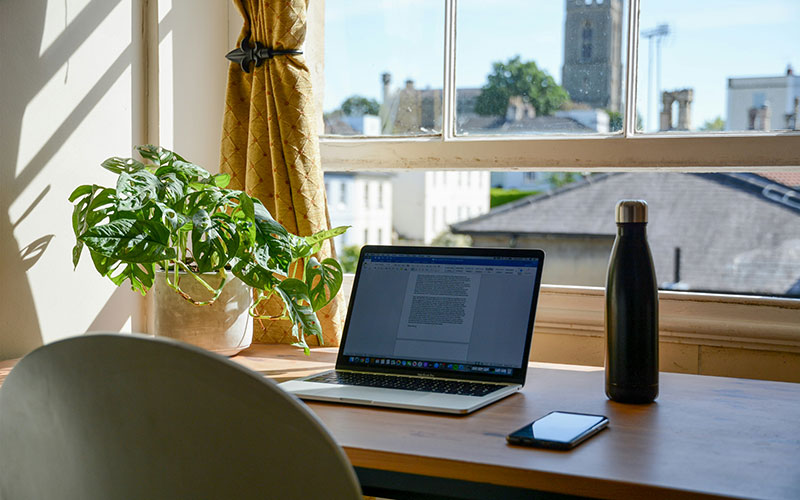
Simple, natural ways to make your workspace cleaner, greener, and more comfortable
Working from home has plenty of advantages, but it can also mean spending most of the day in the same room, at the same desk, and in front of the same screen.
Fortunately, creating a healthier home office doesn’t require an expensive remodel or a completely new workspace. A few simple changes can make your office cleaner, more comfortable, and more connected to the natural world around you.
From reducing dust and improving ventilation to adding a few houseplants and creating a place to step outside, here are 10 practical ways to make your home office a healthier place to spend your workday.
1. Keep Your Workspace Clean
Dust has a way of collecting wherever we spend a lot of time, and a home office has plenty of surfaces where it can settle.
Give your desk, shelves, keyboard area, and other frequently used surfaces a regular cleaning. A damp cloth can help pick up dust rather than simply moving it around.
Don’t forget the less obvious places, either. Dust can collect around computer equipment, behind monitors, along baseboards, and underneath furniture.
Keeping the workspace relatively uncluttered also makes cleaning easier. If you can quickly reach the surfaces around your desk, you’re more likely to keep up with the job.
2. Improve Ventilation and Indoor Air Quality
A home office can become stuffy when the windows stay closed and the room is occupied for hours at a time.
When outdoor conditions are suitable, opening a window or otherwise increasing ventilation can help bring outdoor air into the room. Indoor air quality is also affected by sources of pollutants, dust, moisture, and other conditions inside the home, so ventilation is only one part of maintaining a comfortable indoor environment.
If your office tends to feel damp, dusty, or stale, look for the underlying cause instead of simply covering the problem with air fresheners.
Related: 6 Ways to Keep Bugs Out of Your House This Fall
3. Let in More Natural Light
If your home office has a window, make use of it.
Natural light can make a workspace feel more inviting, and positioning a desk near available daylight can help connect the room to what’s happening outdoors. Just be careful about placing your monitor where direct sunlight creates distracting glare.
You don’t have to choose between natural light and comfortable computer use. Adjust the position of your desk, monitor, blinds, or curtains until you find a setup that gives you useful daylight without making the screen difficult to see.
Good office lighting also matters after the sun goes down. A dedicated task light can provide additional illumination when natural light isn’t enough.
4. Add a Few Houseplants
A few healthy houseplants can make a home office feel more connected to nature without turning the room into an indoor jungle.
Choose plants according to the light you actually have. Some popular houseplants, including snake plants and ZZ plants, tolerate relatively low-light conditions, while others need considerably more light to grow well.
Plants may also contribute to the overall sense of wellbeing in a workspace. The Royal Horticultural Society notes that research on indoor plants points particularly toward potential wellbeing and productivity benefits, while the extent to which ordinary numbers of houseplants significantly improve indoor air quality remains an area of ongoing research.
In other words, grow houseplants because they’re enjoyable, attractive, and bring a little gardening into your workday—not because you expect a handful of pots to replace proper ventilation.
5. Bring Your Own Lunch
Working from home makes it easier to prepare simple meals instead of relying on convenience food.
Take advantage of that.
A homemade lunch can be as simple as leftovers, a sandwich with garden vegetables, a salad, soup, or whatever seasonal ingredients you already have available.
If you grow your own food, your home office can become another reason to use the garden. Fresh herbs, tomatoes, greens, peppers, and other garden produce can turn an ordinary workday lunch into something grown right outside your door.
Using reusable containers and utensils can also reduce the amount of disposable food packaging associated with your workday.
6. Choose Office Materials Carefully
You don’t need to replace all your furniture to create a healthier workspace. But when you’re buying something new, consider how practical it will be to live with over the long term.
Look for furniture and surfaces that are durable, easy to clean, and suited to the way you actually use the room.
Easy-to-clean flooring and furniture can make regular housekeeping simpler. If you’re replacing carpet, furniture, or other large items, this is also a good opportunity to research the materials and finishes before buying rather than choosing solely on appearance.
The goal isn’t to create a perfectly chemical-free office. It’s to make thoughtful choices when you have the opportunity to replace something.
7. Create a Simple Outdoor Space for Breaks
One of the easiest ways to make your home office feel less confining is to give yourself somewhere nearby to go when you need a break.
You don’t need an elaborate patio or professionally landscaped backyard.
A comfortable chair on the porch, a bench near the garden, or a small spot beneath a tree can be enough. If you have a garden, position your outdoor sitting area somewhere you can see plants, flowers, trees, or other parts of the yard.
The important part is making the space easy to use. When it’s close to the house and ready for you to sit down, you’re more likely to actually leave the desk.
8. Take a Walk Through the Yard
An outdoor break doesn’t have to involve a long walk or a complicated exercise routine.
Walk around the yard. Check the vegetable garden. Pull a few weeds. Look at what’s blooming. Water a container garden. Or simply take a few minutes to notice what’s happening outside.
The Royal Horticultural Society recommends simple activities such as pausing to notice nature, taking a sensory walk, and observing wildlife as ways to engage with a garden and create a greater sense of connection with the natural environment.
For gardeners, this has another advantage: your break can double as a quick check on the garden.
9. Make It Easier to Step Away From Work
A healthier home office isn’t only about what’s inside the room. It’s also about how you use the space.
If your desk becomes the place where you work, eat, scroll through your phone, watch television, and handle every other task, it can become difficult to mentally separate work from the rest of your day.
Create simple boundaries where possible.
Keep work materials organized. Put your laptop away when the workday is over. Take longer breaks somewhere other than your desk. If you have an outdoor space, use it as a natural destination when you need to step away.
These small habits can make the home office feel more like a dedicated workspace instead of a place you’re stuck all day.
10. Bring More of the Outdoors Into Your Workday
Your home office doesn’t have to be completely separate from the garden.
A window overlooking the yard, a few houseplants, a vase of flowers, a small container of herbs, or a view of the trees outside can all help bring some of the natural world into the room.
You can also make the transition between indoors and outdoors part of your routine. Open the curtains in the morning. Check the garden during a break. Eat lunch outside when the weather cooperates. Step onto the porch before starting another task.
The Royal Horticultural Society’s guidance on wellbeing gardens emphasizes that even small encounters with nature can provide opportunities to pause, observe, and engage with the world around you. You don’t need a large garden to make that connection.
A Healthier Home Office Doesn’t Have to Be Complicated
Creating a healthier home office doesn’t mean buying a room full of new products or completely redesigning your workspace.
Start with the basics.
Keep the room clean. Improve ventilation when appropriate. Make the most of natural light. Add a few plants that suit your space. Prepare more food at home. Choose durable, easy-to-clean materials when replacing furniture. And, perhaps most importantly, give yourself reasons to leave the desk during the day.
That last part is where a backyard or garden can become especially useful.
A comfortable chair outside, a few minutes checking the vegetable garden, or a short walk around the yard can turn an ordinary work break into an opportunity to reconnect with the part of your home that’s growing, changing, and living just outside the office.
Your home office doesn’t have to keep you separated from nature. With a few simple changes, it can become a place that helps you stay connected to it.
Tags:
health, organic gardening, self-care, basics
Primary Keywords:
healthier home office
healthy home office
Secondary Keywords:
healthy home office ideas
natural home office
home office wellness
indoor air quality
home office plants
natural home office ideas
Long-Tail Keywords:
how to create a healthier home office
natural ways to make your home office healthier
how to improve your home office environment
how to take better breaks when working from home
how to create an outdoor space for work breaks