
How to Freeze Corn From the Garden
Preserve fresh-picked sweet corn for winter with this simple blanching, cooling, and freezing method.
There’s nothing quite like fresh sweet corn at the height of summer, but the season doesn’t last long. If your garden produces more ears than you can eat fresh, freezing is an easy way to save that harvest for later without turning it into a big canning project.
For the best flavor, start with fresh, fully ripe corn and process it as soon after harvest as practical. Sweet corn begins losing sweetness after it’s picked as its sugars gradually turn to starch, so the sooner you preserve it, the better. Freeze the kernels for a convenient ingredient to use throughout the winter in soups, casseroles, skillet dishes, cornbread, and other recipes.
Related: How to Preserve Your Garden Harvest: A Quick Guide to Freezing, Drying, and Storage
Should You Freeze Corn On the Cob or Off the Cob?
You can freeze corn either way, but freezing the kernels is usually the most convenient option. Kernels take up less freezer space and are easy to portion out whenever you need them.
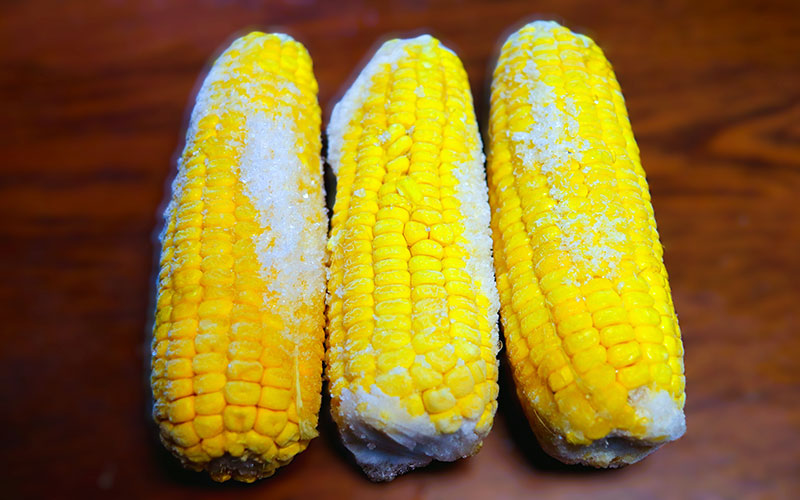
Freezing whole ears makes more sense if you specifically want corn on the cob later. Either way, blanching and cooling the corn before freezing helps preserve its quality.
How to Freeze Corn From the Garden
1. Shuck and Clean the Corn
Remove the husks and as much corn silk as possible from the fresh ears. Give the corn a quick rinse under cool water and inspect the ears for damaged or insect-eaten areas. You can also trim the tip of the cob if needed.
Start with good-quality corn that is fully ripe but not over-mature. The kernels should be plump and release a milky liquid when tested. Processing fresh corn soon after harvest gives you the best starting point for frozen corn.
2. Blanch the Corn
Bring a large pot of water to a full boil. Add the cleaned ears and blanch them for about 3 to 5 minutes, working in batches if necessary so the pot doesn’t become overcrowded.
Blanching briefly heats the corn before freezing and helps slow the natural enzymatic changes that can affect its flavor, color, and texture during storage. The goal isn’t to cook the corn completely; you’re preparing it for the freezer.
3. Cool the Corn in an Ice Bath
As soon as the blanching time is finished, transfer the corn to a large bowl of ice water. Cool the ears quickly so the cooking process stops.
Once the corn has cooled, drain it thoroughly and pat the ears dry with a clean towel. Getting rid of excess surface moisture makes the next step easier and helps keep your frozen corn from becoming icy.
4. Cut the Kernels From the Cob
If you’re freezing kernels, stand a cooled ear of corn upright on a cutting board and use a sharp knife to cut the kernels from the cob. Work carefully and consider placing the cob in a shallow pan or bowl to catch the kernels as they fall.
You don’t need to remove every last bit of corn from the cob. Leave the cob aside and use the kernels for whatever portions make sense for your household.
5. Package and Freeze
Divide the corn into convenient meal-size or recipe-size portions. Pack the kernels into freezer-safe bags or containers, pressing out as much excess air as practical before sealing.
If you’re using rigid freezer containers, leave the appropriate amount of space recommended for the container. Label each package with the contents and date before putting it in the freezer. Smaller portions are easier to use later because you can take out only what you need.
For the best quality, keep your packages well sealed and use older packages first. Proper packaging helps protect the corn from freezer burn and other quality loss during storage.
Tips for Better Frozen Corn
- Start with fresh, ripe corn and preserve it soon after harvest.
- Don’t overcrowd the pot when blanching; work in batches if necessary.
- Cool the corn quickly in ice water after blanching.
- Drain and dry the corn before cutting and packaging.
- Freeze kernels in portions you’ll actually use.
- Remove as much excess air as practical from freezer bags.
- Label and date every package so you can keep track of your harvest.
Enjoy Your Garden Corn All Winter
Freezing sweet corn is one of the simplest ways to stretch a short summer harvest into the colder months. Once the corn is blanched, cooled, cut, and packaged, it’s ready to wait in the freezer until you need it.
A few hours of work during peak corn season can give you a freezer full of homegrown corn for winter soups, casseroles, side dishes, and other meals.