
7 Essential Steps for Making Fireworks a Whole Lot Safer
Follow these practical fireworks safety tips to help prevent burns and injuries while enjoying your Fourth of July celebration.
Fireworks are a Fourth of July tradition, but they also send thousands of people to emergency rooms every year. According to the U.S. Consumer Product Safety Commission, an estimated 13,000 people were treated for fireworks-related injuries in 2025, with burns remaining the most common injury. Fortunately, most accidents are preventable with a little planning and common sense. Follow these fireworks safety tips to enjoy a memorable celebration—for all the right reasons.
1. Appoint a Designated Shooter the Day Before
Rum and Coke and Roman candles are a dangerous combination. One of the biggest contributors to fireworks injuries is poor planning combined with alcohol. Choose one responsible adult to handle every firework before your celebration begins.
Your designated shooter should remain sober throughout setup, lighting, and cleanup. Taking a few minutes to plan the launch area, read the instructions, and understand how each firework works can dramatically reduce the risk of accidents.
Save the celebratory drinks until every firework has been discharged and safely disposed of.
2. Read Every Label Before You Light Anything
One of the most common fireworks safety mistakes is simply not knowing what a firework is designed to do. Reading the label helps you understand its trajectory, expected height, and whether it produces showers of sparks so everyone can stand a safe distance away.
Follow the manufacturer’s instructions for every device. As a general guideline, maintain at least 20 feet of distance from small ground devices and 40 feet or more for aerial fireworks, or follow the label if it recommends an even greater distance. Anyone lighting fireworks should also wear ANSI-rated safety glasses to help protect against flying debris.
If a firework doesn’t have a label because it’s homemade, don’t light it.
3. Never Buy Fireworks From the Trunk of Someone’s Car
Illegal or homemade fireworks are unpredictable because they aren’t manufactured or tested to consumer safety standards.
Items such as cherry bombs and M-80s are illegal explosives—not consumer fireworks—and can cause devastating injuries. Their fuses and explosive power are unregulated, making them especially dangerous.
Purchase only legal consumer fireworks from licensed retailers, and check your state and local fireworks laws before buying or using them. Fireworks that are legal in one community may be prohibited in another.
4. Maximize Your Bang, Minimize the Risk of Burns
Burns remain the most common fireworks injury, and injuries to hands and fingers account for about one-third of all fireworks-related emergency room visits.
Multishot aerial devices can be a safer option because they require lighting only one fuse while producing multiple effects.
No matter what type of consumer firework you use:
- Never lean directly over the fuse.
- Light only one firework at a time.
- Move away immediately after lighting.
- Never attempt to relight a device that appears to be burning slowly.
These simple habits greatly reduce the risk of burns to your hands, face, and eyes.
5. Create a Safe Launch Area
Always launch fireworks from a smooth, flat, stable surface that’s well away from homes, vehicles, dry grass, leaves, and other combustible materials.
Bottle rockets and similar devices should never be held in your hand after lighting. Once the fuse is lit, the firework can ignite unexpectedly or veer off course.
Keep spectators at least the recommended distance away, and make sure children and pets remain well outside the launch area throughout the display.
6. Keep a Bucket of Water Nearby
A bucket of water serves more than one purpose.
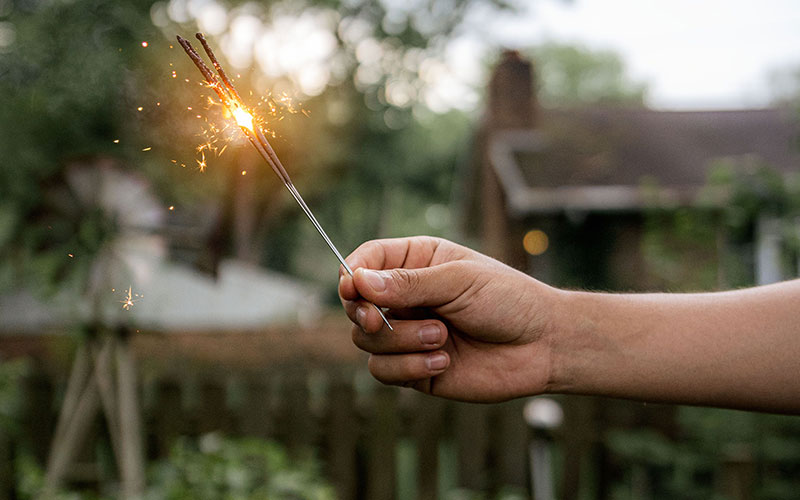
Keep it nearby to extinguish small fires, soak used sparklers, and safely dispose of spent fireworks. Sparklers can burn at temperatures of approximately 2,000 degrees Fahrenheit—hot enough to cause serious burns long after they appear to have gone out.
If a firework doesn’t ignite, never try to relight it. Wait several minutes before approaching it, then soak it thoroughly in water before disposing of it. At the end of the show, soak all spent fireworks before placing them in the trash.
7. Steer Clear of Fireworks Smoke if You Have Asthma
Large fireworks displays can temporarily increase fine-particle air pollution for several hours after the event. For people with asthma or other respiratory conditions, breathing the smoke may trigger symptoms.
If you have asthma, COPD, or another lung condition—or you’re attending with young children or older adults who are more sensitive to smoke—consider watching from farther away or indoors with the windows closed if conditions become smoky.
A spectacular fireworks show isn’t worth risking your health.
Related: Spring Allergies: 5 Costly Mistakes That Make Symptoms Worse
Celebrate Safely
The safest way to enjoy fireworks is to attend a professionally managed public display. But if you choose to celebrate with legal consumer fireworks at home, planning ahead, following manufacturer instructions, and using common-sense safety practices can help prevent injuries and ensure your Fourth of July ends with great memories instead of a trip to the emergency room.